
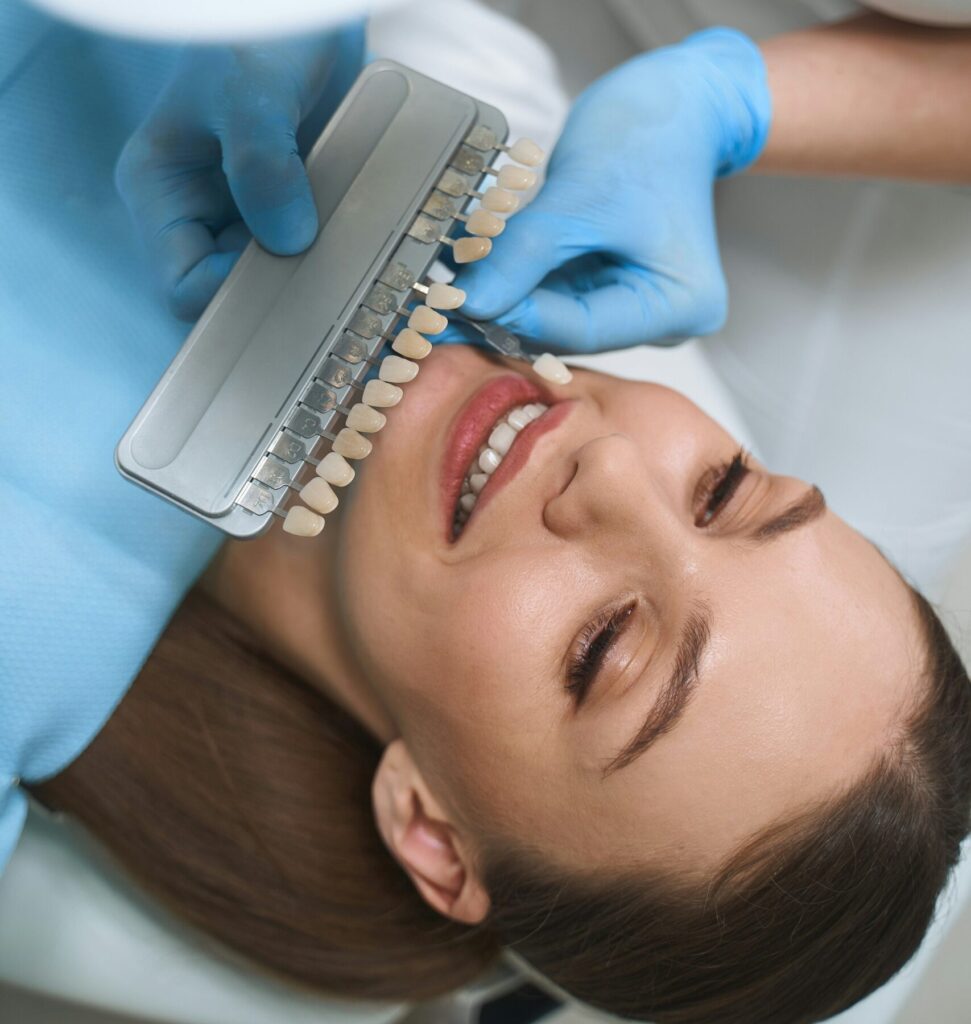
When you look in the mirror, what is the first thing you notice about your smile? For some, it is a single chipped tooth from an accidental bump. For others, it is a lifetime of drinking coffee that has left teeth permanently stained, or perhaps a minor gap that makes them feel self-conscious during photos.
Improving your smile is one of the most personal decisions you can make in cosmetic dentistry. Today, two of the most popular treatments to achieve a flawless look are dental bonding and porcelain veneers. While both procedures can drastically enhance your confidence, they are not interchangeable. They use different materials, require different levels of investment, and serve entirely different purposes.
At Jivan Dental Aesthetics, we believe that premium cosmetic dentistry must balance both aesthetics and function. Choosing between veneers vs bonding is not just about picking the fastest or the most affordable option – it is about understanding what works best for your unique dental anatomy, your bite, and your long-term smile goals.
Dental Bonding vs Veneers: What Is the Difference?
The main distinction between dental bonding vs veneers comes down to the material used, the durability of the treatment, and the overall scope of the transformation.
- Dental Bonding (Direct Composite Restoration): Often referred to as composite bonding, this treatment uses a tooth-colored composite resin applied directly to the enamel. Your dentist sculpts, shapes, and hardens the material right in the chair during a single visit. It acts like a precise, conservative “spot repair” for minor flaws.
- Porcelain Veneers: These are ultra-thin, custom-made shells of cutting-edge ceramic permanently bonded to the front surface of your teeth. They are fabricated outside the mouth after careful digital planning, making them ideal for comprehensive smile makeovers.
In simple terms: Bonding vs veneers is the difference between a master artisan repairing a specific flaw by hand, and a comprehensive architectural redesign of your entire smile. Veneers and bonding both have their place, but bonding refines details, while veneers completely redesign the canvas.
What Is Dental Bonding?
What is dental bonding? Often referred to as cosmetic bonding vs veneers discussions, tooth bonding is a minimally invasive procedure where the dentist applies a high-end, tooth-colored composite material directly to the enamel to patch minor imperfections. In cosmetic dentistry, dental bonding (commonly performed as a single-visit composite restoration) is ideal for subtle refinements. It lets your dentist reshape a tooth, close a small gap, soften a sharp edge, or lengthen an irregular edge without drilling away healthy enamel.
While porcelain veneers are the premier choice for a long-lasting, total transformation, this direct approach is simply a quicker, non-invasive alternative for isolated flaws. It gives your dentist the artistic freedom to tweak your smile while leaving your natural tooth structure fully intact.
Common Uses for Dental Bonding:
- Repairing small chips or cracks in the enamel.
- Using a tailored fix to close a small gap between front teeth.
- Smoothing out slightly uneven or jagged tooth edges.
- Masking mild, localized tooth discoloration.
- Lengthening worn teeth using targeted bonding for front teeth that appear slightly short or irregular.
What Are Porcelain Veneers?
If bonding is a quick repair, what are porcelain veneers? Veneers are high-end, custom-crafted porcelain shells designed to fit over the visible front surface of your teeth. Unlike bonding, which covers a small area, a veneer typically covers the entire front face of the tooth to completely re-engineer its appearance.
When Are Porcelain Veneers Recommended?
- Veneers for stained teeth that do not respond to professional chemical whitening.
- Severely worn-down, shortened, or aged teeth.
- Large gaps or multiple spaces across the entire smile line.
- Minor tooth misalignment or crowding (often called “instant orthodontics”).
- Achieving a complete smile makeover using a high-end veneers look across multiple front teeth to ensure structural symmetry.
Because porcelain veneers for front teeth are fabricated from high-grade dental ceramic, they mimic the light-reflecting properties of natural enamel better than any other material, offering unmatched polish and translucency.
Composite Veneers vs Porcelain Veneers
It is worth noting that when discussing veneers, we must distinguish between composite veneers vs porcelain veneers.
| Feature | Composite Veneers | Porcelain Veneers |
| Material | Engineered resin used in dental bonding | High-grade, laboratory-processed ceramic |
| Application | Hand-sculpted directly on the tooth surface | Custom-made in a lab and bonded later |
| Stain Resistance | Prone to picking up surface stains over time | Highly stain-resistant and color-stable |
| Longevity | Requires more frequent maintenance | Built for long-term structural durability |
| Preparation | Minimal to no enamel removal | Requires subtle reshaping of the enamel |
Targeted Solutions for Specific Smile Concerns
To truly evaluate are veneers better than bonding, we must look at specific dental scenarios.
1. Dental Bonding for Chipped Teeth
When considering the best option for chipped front tooth, scope is everything. Is bonding better than veneers for small chips? Yes. If you have an isolated incident – like a minor chip on an otherwise healthy tooth – dental bonding for chipped teeth is exceptionally efficient. However, if the chip is large or caused by a heavy structural bite issue, bonding may snap off under pressure, making a veneer safer.
2. Veneers for Stained Teeth
Some stains live deep within the tooth structure due to trauma or previous medications. Professional bleaching cannot reach these. Veneers vs bonding for stained teeth is a clear victory for porcelain. Placing composite over multiple teeth to hide deep discoloration can look thick or chalky. Veneers for stained teeth offer a fresh, permanently bright surface that will not yellow over time.
3. Bonding vs Veneers for Gaps Between Teeth
If you are wondering, should I get veneers or bonding for gaps, it depends on the total number of spaces. When you want to close a small gap between two front teeth, dental bonding offers a conservative way to add just enough composite to bring the teeth closer together without changing their natural structure. When deciding how to fix a small gap between front teeth, utilizing cosmetic bonding for gaps between teeth is an excellent, non-invasive choice. But if you have multiple gaps across your smile, using bonding might make your front teeth look disproportionately wide. Veneers for gaps between teeth allow the dentist to distribute the spaces evenly across several front teeth, maintaining perfect proportions.
4. Veneers vs Bonding for Worn-Down Teeth
Over time, acid wear or grinding can leave you with short, fragile teeth. Can veneers fix worn down teeth? Yes, because porcelain provides structural rigidity. Can bonding fix uneven teeth caused by wear? Only if the wear is minimal. Composite resin lacks the compressive strength of porcelain; if you grind your teeth, bonding is much more likely to wear away or chip under daily friction.
Financial Investment: Dental Bonding Cost vs Veneers Cost
It is no secret that dental bonding cost is lower upfront than veneers cost. Bonding requires no dental laboratory fees, fewer appointments, and less material overhead.
However, looking purely at the initial price tag can be misleading. Consider the long-term maintenance:
- Dental Bonding: Composite resin is a porous material. Over time, it naturally undergoes micro-wear, loses its initial polish, and absorbs pigments from dark foods and drinks. It will eventually require routine touch-ups or replacement.
- Porcelain Veneers: Premium porcelain veneers are fundamentally different. Because the ceramic is non-porous and glass-like, it is completely impervious to staining and maintains its pristine appearance for the long haul.
A lower-cost option is not a true value if it requires frequent repairs, making a higher-cost option like porcelain a smarter long-term investment for a flawless smile.
Clinical Prerequisites: Whitening and Your Bite
Before diving into any cosmetic work at Jivan Dental Aesthetics, two critical clinical factors must be addressed:
Should I Whiten My Teeth Before Veneers or Bonding?
Absolutely. Both composite resin and porcelain are completely resistant to whitening gels. If you undergo cosmetic work and then decide to whiten your teeth, your natural enamel will brighten, but your restorations will stay the exact same shade, leaving you with mismatched teeth. Should I whiten teeth before bonding or veneers? Yes – always whiten your teeth first, let the shade stabilize, and then have your dentist match the restorations to your new, bright shade.
Do Veneers or Bonding Fix Bite Problems?
Neither treatment is designed to fix underlying orthodontic or structural jaw issues. If you suffer from severe misalignment, crossbites, or heavy teeth grinding, placing beautiful cosmetic work on an unstable bite is a recipe for failure. The forces of your jaw will simply break the porcelain or composite. In these cases, a holistic approach involving minor orthodontic alignment or bite therapy must come first.
How to Choose Between Veneers and Bonding
When figuring out how to choose between veneers and bonding, you don’t have to guess. During a professional consultation at Jivan Dental Aesthetics, we evaluate your smile through a comprehensive lens, analyzing:
- Enamel Health: Do you have enough healthy enamel to support porcelain or composite?
- Bite Realities: How do your upper and lower teeth meet when you chew?
- Aesthetic Goals: Are you looking for a subtle, localized touch-up or a dazzling smile makeover?
For minor, isolated, and conservative adjustments, bonding is spectacular. For dramatic, permanent, and highly polished cosmetic dentistry for uneven front teeth, veneers are unmatched.
FAQ
Is bonding cheaper than veneers?
Yes, dental bonding is generally cheaper than porcelain veneers because it uses composite resin that is placed and polished in a single appointment instead of custom‑made porcelain shells.
Does bonding look as good as veneers?
Bonding looks incredibly natural for small, localized repairs like a chipped edge. However, for a multi-tooth transformation, porcelain veneers offer superior texture, translucency, and a high-gloss finish that matches natural enamel perfectly.
Can bonding fix gaps between teeth?
Yes, dental bonding can close minor gaps between one or two teeth. If the gaps are widespread or caused by structural bite issues, orthodontics or porcelain veneers are usually recommended.
Are veneers permanent?
Traditional porcelain veneers require a very subtle layer of enamel to be removed so the shell sits flush with your gumline. Because enamel does not grow back, veneers are considered a long-term commitment.
Which lasts longer, veneers or bonding?
Porcelain veneers last significantly longer. Porcelain is highly resistant to staining and physical wear, whereas composite bonding is a softer material that is more prone to chipping and discoloration over time.
Can I get bonding first and veneers later?
Absolutely. Many patients choose dental bonding as an accessible, conservative first step to test out their new look before upgrading to the permanence and unmatched beauty of porcelain veneers later on.