Sleep apnea has quietly become one of the most talked about health topics of 2026. Health researchers now estimate that roughly 54 million adults in the United States have some degree of sleep apnea, and nearly half the population snores at least occasionally. As awareness grows, so does frustration with the standard treatment. CPAP machines are effective, but many patients find the mask, the noise, and the tubing hard to live with night after night, and a large share of patients stop using their machine within the first year.
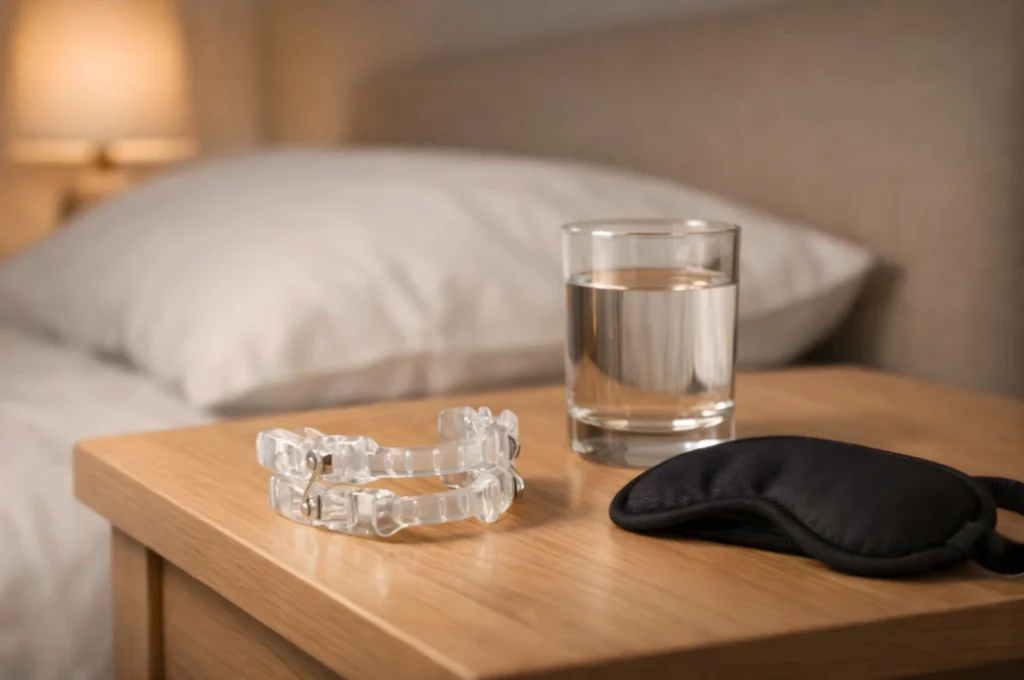
That frustration is fueling a genuine shift in how sleep apnea gets treated. Dentists and sleep physicians are collaborating more closely than ever, and oral appliance therapy, a custom-fitted device worn at night that gently repositions the jaw to keep the airway open, has moved from a niche alternative to a mainstream option recommended for people with mild to moderate obstructive sleep apnea or for anyone who simply cannot tolerate a CPAP mask.
Why Oral Appliance Therapy Is Having a Moment
A few things are driving this trend into the mainstream conversation:
- New research keeps confirming it works. Recent clinical reviews show mandibular advancement devices reduce apnea severity, improve oxygen levels, and ease snoring and daytime fatigue for patients who cannot tolerate CPAP.
- Digital dentistry has made the devices far more comfortable. Digital impressions and bite scans now replace the old messy molds, and appliances fit more precisely than earlier generations of devices.
- More dentists are getting trained in it. Professional dental sleep medicine organizations have expanded their training programs, and collaboration between dentists and sleep physicians is becoming the norm rather than the exception.
- People are simply done fighting with their CPAP machine. Anyone who has tried to sleep with a mask strapped to their face and tubing running to a machine on the nightstand understands the appeal of a small device that fits in a pocket.
Is This the Right Option for You?
Oral appliance therapy is not a replacement for a proper diagnosis. A sleep study ordered by a physician is still the right first step, and the device needs to be fitted and monitored by a dentist trained in sleep medicine to make sure it’s working and not creating new bite problems over time. But for the right candidate, especially someone with mild to moderate obstructive sleep apnea or someone who has simply given up on CPAP, it can be a comfortable, effective, and far more livable solution.
How Jivan Dental Aesthetics Can Help
At Jivan Dental Aesthetics, with offices, Dr. Mitesh Jivan offers Dental Sleep Medicine solutions as part of a whole-patient approach to care. That means a thorough evaluation of your teeth, jaw, and airway, a custom-fitted oral appliance designed around your bite, and ongoing follow-up to confirm the device is actually improving your sleep, not just your comfort.
If snoring, daytime fatigue, morning headaches, or a CPAP machine gathering dust on your nightstand sound familiar, it may be worth a conversation about whether oral appliance therapy fits your situation.