
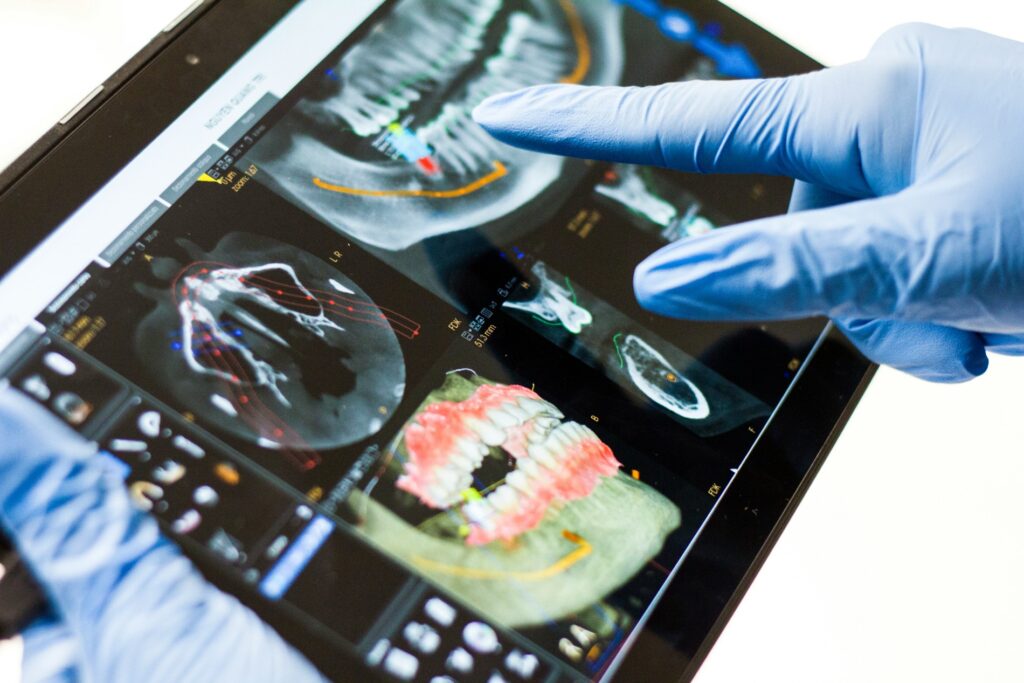
Advanced dental technology is not about using new tools simply because they are new. At its best, technology helps dentists see more clearly, diagnose more accurately, plan more carefully, and treat patients with greater precision. It can also make dental visits feel more organized, comfortable, and well-planned from the beginning.
For patients, that clarity matters. When you visit the dentist, you want to understand what is happening, why it matters, what your options are, and what kind of result you can expect. Modern dental technology supports that process – whether you are coming in for a routine exam, cosmetic dentistry, dental implants, bite concerns, or a more complex treatment plan.
What Is Advanced Dental Technology?
Advanced dental technology refers to the tools, imaging systems, instruments, techniques, and planning methods dentists use to evaluate and treat oral health concerns with higher precision. At Jivan Dental Aesthetics, this includes digital imaging, photography, magnification, 3D imaging, and digitally guided implant planning.
However, the most important part is not the tool itself, but how it is used. Technology helps provide better information so the dentist can answer key diagnostic questions: What is the underlying cause of the concern? How healthy are the teeth, gums, bone, and bite? What treatment options are most realistic and conservative? How can the final result be made stable, comfortable, and precise?
Why Technology Matters in Modern Dentistry
Modern dentistry focuses on detecting issues early, planning treatment thoughtfully, and preserving as much natural tooth structure as possible. Advanced dental technology supports this approach by offering clearer diagnostic information and a complete view of the whole mouth.
That can be especially helpful for patients with more than one concern. For example, a patient may seek care for a cosmetic issue, but the dentist may also notice gum inflammation, worn enamel, bite imbalance, or older dental work that needs attention. Technology helps connect those pieces so the treatment plan makes sense as a whole.
Digital Imaging and Photography
One of the most useful aspects of modern dental care is the ability to see details beneath the surface. Digital imaging and photography provide a clear view of tooth, bone, and gum health, evaluating areas that are simply not obvious during a visual exam alone.
This matters because many dental issues develop quietly:
- Early decay between teeth.
- Bone changes around teeth or missing areas.
- Minor leaks or breakdown beneath older fillings or crowns.
Clear imaging helps identify these problems earlier, making treatment simpler, less invasive, and more conservative.
Magnification and Precision Care
Dental magnification gives the dentist a closer look at fine details such as subtle enamel cracks, early wear patterns, and the margins around existing restorations. Seeing those details clearly supports a more careful approach to care.
Small details often have a large impact over time. A tiny crack, a slight gap around an old filling, or an early change in the gumline may signal a larger issue if left unaddressed. Magnification helps evaluate those concerns precisely so treatment can be planned with complete confidence.
Technology in Dental Implants
Dental implant care is one of the clearest examples of how technology supports clinical precision. Implant cases are personally planned using 3D imaging to evaluate bone structure and underlying anatomical considerations. Digital planning software and 3D-printed surgical guides are then used to support careful implant placement.
Careful planning matters because an implant is not simply placed where a tooth is missing:
- Bone volume must provide adequate support for long-term stability.
- Surrounding teeth and anatomical structures must be protected.
- Bite forces need to be considered for daily chewing pressure.
- The restoration must align properly with the final custom tooth.
If you are considering dental implants, this kind of planning helps create a treatment path that is organized and precise.
Cosmetic Dentistry and Functional Planning
Advanced technology also plays a vital role in cosmetic dentistry. Achieving a natural, beautiful result depends on far more than tooth shade alone – because tooth shape, gumline contours, bite alignment, enamel health, and the condition of existing dental work all matter.
Technology allows the dentist to evaluate these details before recommending treatments such as porcelain veneers, bonding, crowns and bridges, or a smile makeover. If teeth are worn or affected by heavy bite pressure, those factors must be built into the treatment plan so that cosmetic care not only looks good, but also functions well over time.
Advanced Technology in Preventive Care
Advanced technology is not reserved only for complex procedures; it also elevates routine preventive care. Digital imaging, photography, and magnification help monitor subtle changes over time, allowing for proactive care rather than reactive treatments.
By capturing early signs of wear, shifting, or gum changes, preventive care becomes more effective and helps you retain healthy, natural tooth structure for as long as possible. That is one reason preventive dentistry is such an important part of long-term oral health.
Clearer Communication and Patient Comfort
Another major benefit of modern technology is improved communication. When you can see clear images or photos of your own teeth on a screen, it becomes much easier to understand your diagnosis and evaluate your treatment choices.
This transparency helps eliminate uncertainty, which is often one of the primary sources of dental anxiety. When the plan is clear, you can feel confident moving forward. Modern technology helps turn your appointment into a collaborative conversation.
Technology Supports the Dentist
Even with the most advanced tools, a dentist’s clinical judgment and experience matter most. Technology provides detailed visual data, but it does not make diagnostic decisions on its own.
The best results come from combining modern diagnostic tools with clinical experience, practical skill, and a deep understanding of your personal goals. Advanced technology should always be seen as a supportive tool that enhances precise care and patient understanding.
The Bottom Line
Advanced dental technology helps turn information into action. With clearer insight, the dentist can plan care more deliberately, and patients can move forward with greater confidence. At Jivan Dental Aesthetics, that technology supports a whole-mouth approach that considers function, appearance, and long-term oral health. If you are exploring preventive care, cosmetic dentistry, dental implants, or a more complete treatment plan, connect with the team to learn what modern, technology-guided care can offer.
Frequently Asked Questions
What is advanced dental technology?
Advanced dental technology refers to modern tools, imaging systems, and digital planning methods used to evaluate, plan, and perform dental care with higher precision.
Why is digital imaging important?
Digital imaging reveals areas that are not visible during a standard visual exam, such as bone levels, root health, and decay between teeth, supporting earlier diagnosis.
How does technology help with dental implants?
Technology allows dentists to evaluate bone structure in 3D, plan implant placement digitally, and use 3D-printed surgical guides for a well-planned procedure.
Is advanced dental technology only for major procedures?
No. Technology also supports routine exams, preventive cleanings, cosmetic planning, and long-term oral health monitoring.
Does technology replace the dentist’s skill?
No. Technology provides clear visual data, but clinical expertise, diagnostic judgment, and personalized care remain essential for achieving quality outcomes.