
By Dr. Jivan | 5 min read | TMJ & Botox
When most people hear the word Botox, they think of cosmetic treatments. What many don’t realize is that Botox is also used to help manage conditions such as TMJ disorders, teeth grinding, chronic jaw tension, migraines, and excessive sweating.
Even better? You don’t have to visit a med spa to receive treatment. Dentists who are trained in therapeutic Botox applications can use it as part of a comprehensive approach to improving oral health, jaw function, and quality of life.
If you wake up with jaw soreness, frequent headaches, sensitive teeth, facial tension, or have been told you grind your teeth at night, the source of the problem may be your jaw muscles, not stress alone.
Much of the conversation around Botox starts with before-and-after photos, smoothed foreheads, and lifted brows; it starts with the language of beauty culture. That framing leaves out a significant portion of the people who actually benefit from it, because for a lot of patients, the face isn’t the point at all.
For many, it’s the jaw.
The Problem Living in Your Jaw
Temporomandibular joint disorder, known as TMJ, affects the joint that connects the jawbone to the skull. When something goes wrong there, the consequences ripple outward: chronic jaw pain, headaches that start at the temples and don’t quit, facial tension that feels like wearing a helmet two sizes too small, difficulty chewing, a clicking or popping jaw, and interrupted sleep. Some people have lived with these symptoms for years without connecting them to the jaw.
The masseter muscle, the thick band of muscle that runs along the sides of the jaw, is often at the center of the problem. In people who clench their teeth during the day or grind them at night (a condition called bruxism), the masseter becomes overworked. Over time, it can enlarge and tighten, putting sustained pressure on the joint and creating a cycle of pain that is difficult to break with conventional approaches alone.
This is where Botox enters the picture.
What Botox Actually Does in the Jaw
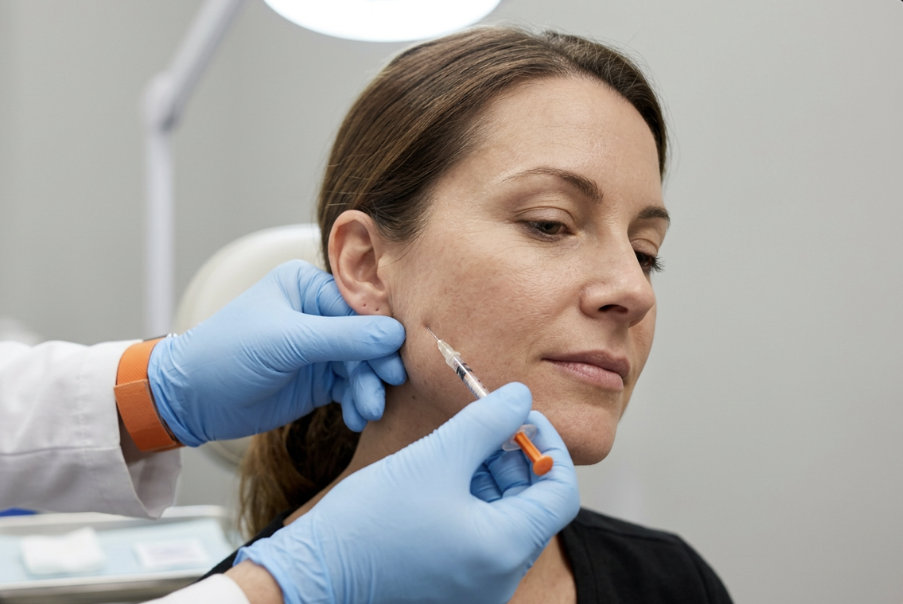
Botox, or botulinum toxin, works by blocking the nerve signals that cause a muscle to contract. Injected into the masseter, it reduces the intensity of involuntary clenching without affecting the ability to chew or speak normally. The muscle relaxes and the pressure on the joint decreases. Many patients begin noticing relief within days, though results and timing can vary from person to person.
This is not experimental. Botox injections for bruxism and TMJ-related pain have been studied extensively, and the results support its use as a meaningful tool in managing these conditions. Dentists such as Dr. Jivan who are trained in this application understand the anatomy of the jaw in a way that makes them particularly well-suited to administer it accurately.
Why the Dentist’s Office?
At Jivan Dental Aesthetics, Dr. Jivan practices comprehensive care, meaning the same office that handles your crowns, implants, and sleep appliances also addresses the functional health of your jaw and bite. TMJ is not a cosmetic problem. Neither is bruxism. Both are clinical conditions with real physical consequences, and treating them requires someone who understands how the teeth, jaw, and surrounding structures all interact.
Patients who have tried night guards and found them insufficient, or who wake up with sore jaws and tension headaches despite doing everything right, often find that Botox fills the gap. The treatment takes minutes in-office. Results typically last three to six months, and with repeat treatment, some patients find that their masseter’s intensity decreases over time as the muscle is no longer being perpetually overworked.
Signs You May Be a Candidate for Botox for TMJ
While every patient is different, Botox may be worth discussing with your dentist if you experience:
- Jaw pain or tightness
- Frequent morning headaches
- Teeth grinding or clenching (bruxism)
- Facial muscle fatigue or tension
- Clicking or popping of the jaw
- Difficulty opening or closing the mouth comfortably
- Tension-related migraines
- Worn, chipped, or fractured teeth caused by grinding
A comprehensive evaluation can help determine whether Botox may be an appropriate addition to your treatment plan.
The Wider Picture
Beyond the jaw, Botox has documented applications for chronic migraine prevention, hyperhidrosis (excessive sweating), and certain types of neck pain related to muscle tension. These are quality-of-life issues that extend beyond aesthetic purposes.
The cultural association between Botox and aesthetics is strong, but it is not the whole story. The same compound that softens a wrinkle can quiet a jaw that has been clenching for twenty years. The mechanism is identical. The motivation is entirely different.
One Question Worth Asking
If jaw pain, morning headaches, or nighttime grinding has become a background condition you’ve learned to tolerate, it’s worth having a conversation with a dentist who understands the full scope of what Botox can address.
You don’t have to live with chronic jaw tension, headaches, or teeth grinding. If you’re experiencing symptoms of TMJ or bruxism, schedule a consultation with Dr. Jivan to determine whether Botox may be an appropriate part of your treatment plan.